“When are you all free?”
Stop asking.
One Last Yes finds the moment when the most of your friends can actually be there — by reading everyone's availability, and never showing anyone what is in your calendar.
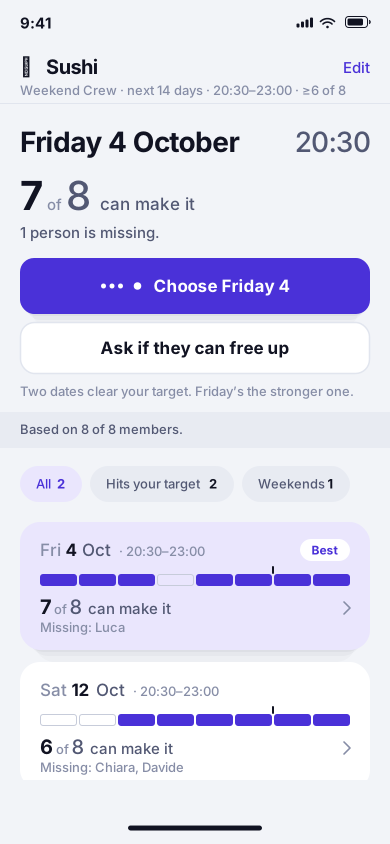
Friday 4 October20:30–23:00
7of 8 can make it
Two dates clear your target. Friday's the stronger one. 1 person is missing.
Illustrative screens and data.
Plans don't die on what. They die on when.
“When are you all free?” — “I can't on Friday.” — “Saturday?” — “I'm working.” — “Sunday?” — “Luca can't.”
- 1
Availability is private.
Nobody publishes their calendar to a group chat. So the group re-derives by hand, from scratch every time, information that already exists in eight calendars.
- 2
The question is asked serially.
Each proposed date is a round trip to eight people. It is why groups stop trying at around the third proposal.
- 3
The perfect slot usually doesn't exist.
With eight busy adults, “everyone is free” is almost always the empty set. Every tool that solves for unanimity returns nothing, and the plan becomes a plan that never happened.
An answer, not an overlap to interpret.
The first of the two things. Finding a time here is an optimisation, not a hunt for unanimity: maximise participation, subject to each person's constraints. What comes out is a ranked recommendation with its reason already attached — “Fri 4, 20:30, 7 of 8” — and not a matrix to read.
A poll asks people to compute the answer. This computes it, and then improves it.
- Dates are ranked by participation, counted in people rather than percentages.
- The top three stay open; the rest sit behind one tap.
- Who is missing shows as a number. Who blocked what, never.
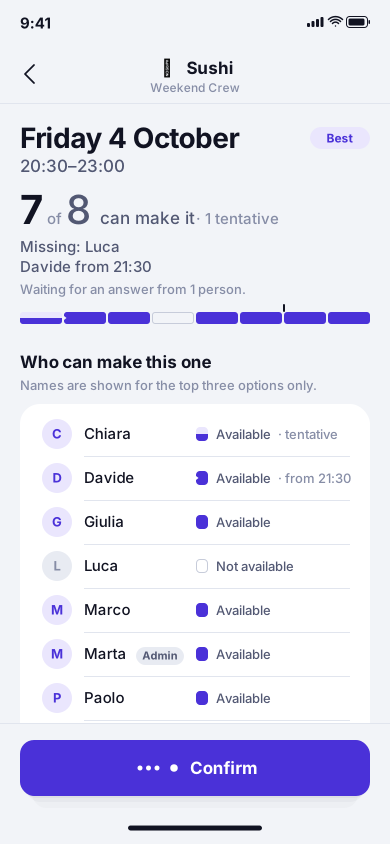
Then it goes and gets the people who are missing.
The second, and the reason for the name. When the best slot is close but not complete, we privately ask the one or two people who are the difference whether that particular conflict happens to be movable. Once, with an easy no.
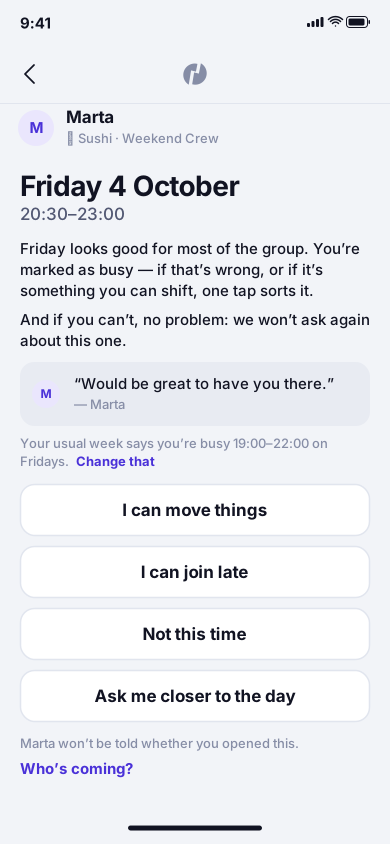
Four answers, all of the same weight.
- I can move things
- I can join late
- Not this time
- Ask me closer to the day
- We never tell the recipient they are the only one missing: the count is what turns a request into an obligation.
- One ask per person per activity, and at most one per person every seven days across all groups.
- “Not this time” and saying nothing look identical, at the end of the window. Refusing costs nothing.
It works for the person who connects nothing.
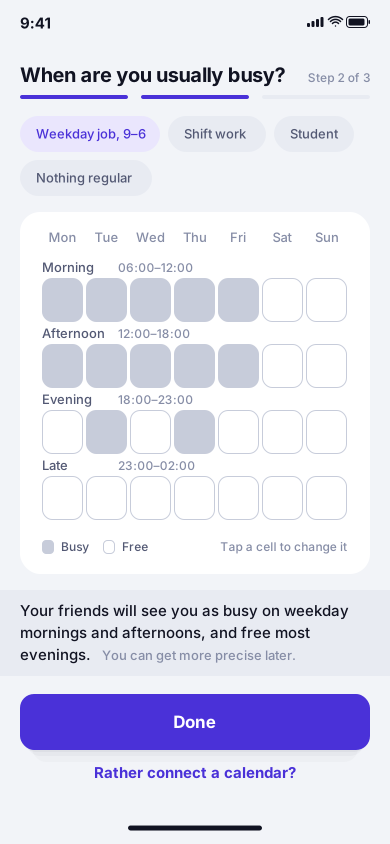
Every group has someone who will never connect a calendar. Here they don't have to: three recurring rules — “work Mon–Fri 9–18”, “gym on Tuesdays” — and they're in, in under a minute.
- Connecting no calendar doesn't make you a second-class member: no “limited” labels, no upgrade prompts.
- Someone arriving from an invite can add their availability with no account, no calendar and no password.
- When a calendar is there it comes from Google, Microsoft or Apple, and it stays an optional step, never the first one.
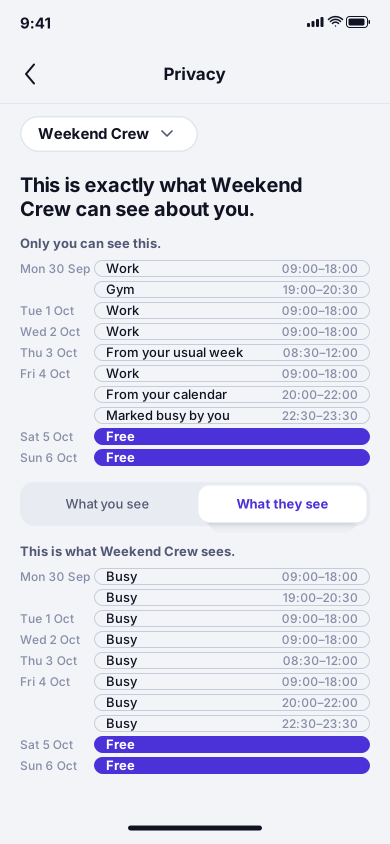
Others see whether a window is free. Never why it isn't.
- Never event names, places or guests, and never which calendar a commitment came from.
- “Not specified” has five different causes — hidden, no calendar, sync error, incomplete setup, no data at all — and is drawn in exactly the same way for all five. No screen tells them apart.
- One dial, three positions, one tap from joining: Name and status, Count only, Hidden.
- Availability is never encoded on a red/green axis: every state carries a label, a shape and a fill before colour is applied.
What it will never do.
- No read receipts, no “seen”, no “last active”.
- No countdowns, no badges, no congratulating you for using it.
- No per-person statistics. “Luca blocked 4 of 5 dates” is a feature we must be structurally unable to ship.
- No partial invites: an activity always goes to the whole group.
- It doesn't ask twice. A product called One Last Yes cannot ask twice.
It's coming.
One Last Yes is on its way. If coordinating your group has been your job for years, write to us and tell us about the plan that keeps not happening.
Write to usThe screens on this page are illustrative and the data in them is made up.